Building Your Own AI Flyer Generator: Enhancing Restaurant Promotions With Smart Design

Introduction to AI Flyer Generators
Gone are the days when restaurants would affix a few lines of text to create flyers, only to pick them up, print them, and stick them outside. Today, there are visual tools that a kid could pick up and generate a perfect postcard-shaped flyer requiring low-cost printing to post from the restaurant itself or the local grocery store. Flyer generators are now available for busy restaurant professionals who need something to promote on a frequent basis. Here, we’ll discuss building your own AI flyer generator, how they work and the advantages of using them, along with best flyer practices that your restaurant will need to adopt to best utilize them.
Anyone can create a poster or a flyer for their business using a flyer generator, and these flyers are pleasing to the eyes. Even for something as mundane as a grocery flyer, there are tools available that are as sophisticated as those operated by a professional marketing agency. Using it is as simple as filling form fields never exceeding a couple of paragraphs! Yet, they create something fit to be printed, as long as you uploaded high-quality images, and posted by a professional.
The Role of Visual Appeal in Food Marketing
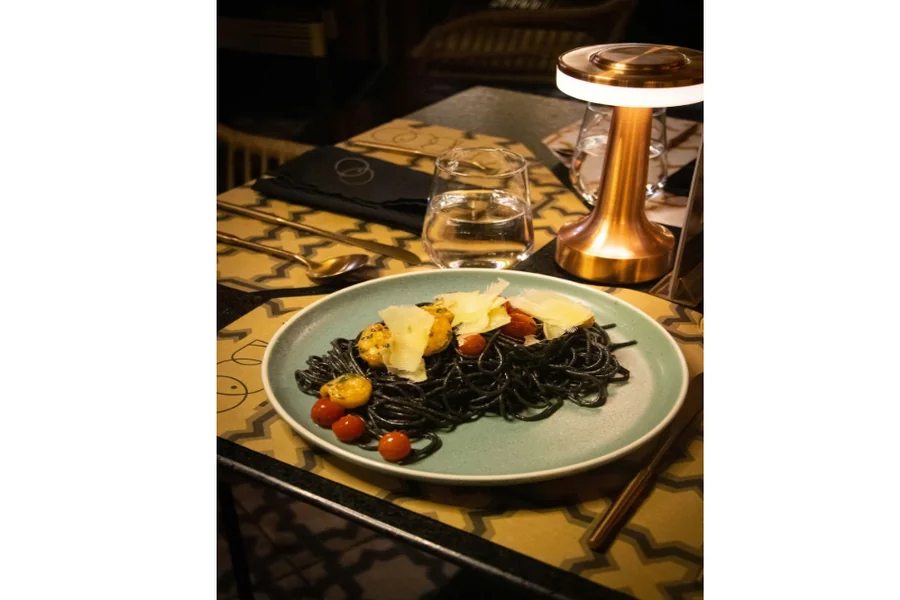
You’re headed out, hungry for a bite to eat, and in the drive-thru lane. All of a sudden, the bright colors of a nearby fast-food chain determine the impulse to stop and order a cheeseburger. As you receive the crispy, shiny corn chips in the bright-yellow bag, letting you know you’re about to enjoy a great snack, you feel even hungrier. Finally, you place your food on the colorful flyer of the restaurant you’ve chosen after an impulsive decision, and all the amazing flavors mix together into a pleasant experience. The previous situation briefly describes why food photos are extremely important for a restaurant’s marketing strategy: they play, together with text, a vital role in catching customers’ eyes, luring them in to try your appetizers, and tempting them to order their dinners with you. Restaurant flyers are indispensable tools for creating first-time customers regarding takeout or delivery. However, many restaurants lack the budget to hire a professional photographer for product photography and a graphic designer to create enticing flyers that can generate orders quickly. People are visual creatures; we rely on our sight more than any other sense to interact with our world. In fact, most people think in pictures. Studies have shown that the presence of visuals increases the likelihood of conversion. Because people are constantly bombarded with stimuli, they’ve learned to skim through reams of information. Images are processed 60,000 times faster than text, catching the readers’ attention while they’re scanning for anything that stands out. This is why images deliver engagement and conversion at 90%. Even when good visuals don’t make the sale, they reinforce the copy and motivate readers to take action.
Step-by-Step Guide to Using AI Tools
Flyers are vital for restaurant advertising, effectively conveying information and generating interest and sales. Key design elements include brand consistency, readable typography, and engaging images. There are two primary AI-based methods for creating flyers. The first method is easy: fill in keywords and style preferences using an AI generator, but it has significant downsides. The second, preferred method involves a step-by-step breakdown of the flyer creation process. This allows for specialized content for each stage, such as text, fonts, and layouts, ultimately leading to better results. While many AI art generators produce images without distinct styles and may create odd artifacts, using stock photos can help resolve these issues. A well-crafted flyer comprises a headline, text, background image, and layout. By assembling these components manually, you ensure higher quality and precise alignment. You can incorporate fun effects or short text snippets using the AI image generator, but it’s crucial to define the quality for each element individually. It is recommended to create the flyer progressively, beginning with a bold, large headline, followed by additional text in manageable segments, while choosing an appropriate background and style throughout the process.
Color Schemes and Branding
Building your own AI flyer generator requires making branding decisions first. Your color schemes and brand elements must align with your restaurant’s image, whether it’s a low-cost taqueria or a Michelin-starred fine dining establishment. If you have an established brand, use consistent elements like logos, colors, and fonts from your other marketing materials. If not, develop a brand that conveys your restaurant’s essence at a glance. Consider the nature of your food: Is it exotic or comforting? Use colors and fonts that reflect these qualities. Choose warm colors for comforting meals and cool tones for refreshing dishes. Pay attention to texture: for crunchy foods, opt for fonts that convey crispness; for creamy dishes, select smoother, softer fonts. Use earthy colors for savory meals and brighter colors for lighter options.
Typography Tips for Readability
Typography Tips for Readability Now, it’s time to get into the flyer text itself. You want it to look good, but also completely legible. You want to avoid fancy cursive-style fonts or heavily stylized fonts. People do not want to spend the time reading fonts that are hard to comprehend! Choose fonts that are simple and easy to read from a distance, like Helvetica, Arial, or Times New Roman. Choosing the right font is crucial, as it needs to be on-brand and readable. Not all beautiful fonts are legible, making font pairing challenging. Prioritize legibility for a flyer with minimal information. Stick to one or two fonts to avoid overwhelming readers. White and red represent Perkins well, while stylized fonts can attract attention. Only bold or italicize one or two key elements to maintain clarity and prevent a messy look.
Imagery: Choosing the Right Photos
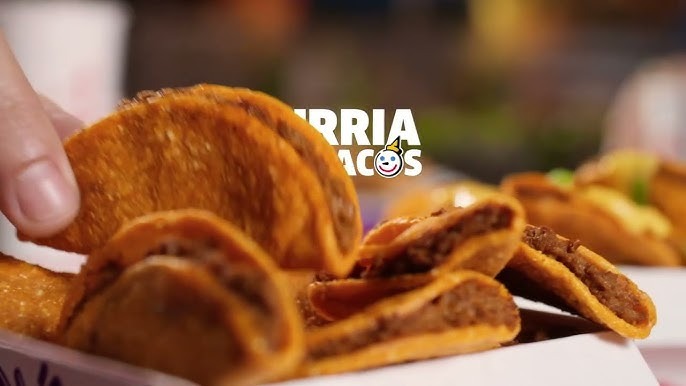
Finding the right images to capture attention is challenging. Avoid generic stock photos; instead, seek professional food photography or skilled staff. High-quality food shots can entice customers, while close-ups of drinks can attract happy hour visitors. Original, colorful, and detailed photographs highlight freshness and quality. Not every menu item needs a photo; showcasing an array of tacos in various colors can be effective. Use photos to convey the restaurant’s atmosphere, such as a sunset view or a bustling bar. Flyers can feature specific meal times or promotions, emphasizing meals like Sunday brunch or taco Tuesdays. Include images of special deals to draw in customers. Composing the flyer is also an opportunity to suggest complementary sides; for example, while promoting taco Tuesday, display those tacos with a margarita and chips with salsa, enticing customers to enhance their order.
Conclusion
We hope that this little advice on how building your own AI flyer generator scrapes the surface of the power of AI and how you can practically use it to build your restaurant marketing content like no other tool. In the modern, ever-accelerating day and age we live in, where people’s attention span is getting shorter and shorter, being able to produce visual, communicative work at scale and the highest level of quality is one of the most important components of any business’ marketing manager. Very few have the ability to create their marketing assets at a cost that is comparable to what you could get by using talent-demanding graphic artists. But none could do it at a speed and ease that has now become available through the power of personal and easily customizable AI.
However, while the text prompts described will remove the friction of building your flyers from scratch and be an endless source of new ideas, remember that they still should be a backup support for your creativity. Our advice is to always keep an experimental, curious spirit and add your unique brand’s personality to anything you generate. Comparatively speaking, AI is a little child compared to you and has had way less experience or input of the world and of how it works. Any marketing piece and communication should be an authentic reflection of the person, people, or team behind them, and cannot live detached from the unique qualities of your brand that attracts customers, the same customers that for better or for worse cannot be totally modeled or replicated like the ones purchased by a targeting algorithm in a digital campaign.
We wish that by handling such marketing assets with the help of technology, you could spend more time creating a place where the whole process happens, a safe space and happy moments are shared over good food and drinks, and for that to always be the heart of the machine you grew and nourished.